
'The Indian economy and the Indian financial sector today remain resilient and much better placed.'
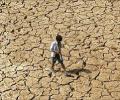
About 60 per cent of net sown area of the country is rain-fed. With every one per cent deficit in rains, the country's gross domestic produce falls by 0.35 per cent.

In the last financial year, GDP growth was 7.3 per cent.

It's the first time in my memory that I have seen a negative expected return for equities, notes Akash Prakash. Hopefully, this implies the consensus is being too negative, and markets, as usual, will surprise everyone and deliver the least likely outcome.

India's real GDP growth is set to exceed 7 per cent for CY-2015.

Advertisement revenues will go up in 2016-17 with automobiles and e-commerce being big contributors.
The government hopes of registering GDP growth rate ranging between 6.1-6.7 per cent in 2013-14.

Equity indices made an emphatic comeback on Friday after falling for seven straight sessions after the RBI hiked interest rates by 50 basis points on expected lines and projected inflation coming under control from January next year. A strong recovery in the rupee added to the momentum, traders said. Overcoming a wobbly start, the 30-share BSE Sensex soared 1,016.96 points or 1.80 per cent to settle at 57,426.92. During the day, it rallied 1,312.67 points or 2.32 per cent to 57,722.63.
The steep fall in rupee came on a day when the Reserve Bank of India in its first quarter review of monetary policy kept the all key rates unchanged but cut the gross domestic growth forecast to 5.5 per cent for FY'14 from 5.7 per cent earlier.

Concerned over elevated inflation, Reserve Bank of India on Friday decided to leave the benchmark interest rate unchanged at 4 per cent but maintained an accommodative stance, implying more rate cuts in the future if need arises to support the economy hit by the Covid-19 pandemic.

The IMD attributed the projection to a weakening of El Nio and the Indian Ocean Dipole turning positive.
India is projected to see moderate average annual growth of 5.9 per cent during the 2014-18 period amid the country witnessing macroeconomic weaknesses, according to Paris-based think tank OECD.

The finance ministry said on Tuesday that high energy and commodity prices due to the Russian invasion of Ukraine may provide an upside risk to inflation and continued vigil is required. "Going forward, elevated energy and commodity prices may act as an upside risk to the inflation outlook in the near-medium term. "Given the inherently unsustainable nature of high prices, international commodity prices are expected to level off early with an increase in supplies outside the crisis zone," the department of economic affairs said in its latest monthly economic report for February.

RBI said inflation in the second half of the current fiscal is projected at 2.7-3.2%. It retained its GDP forecast for the current fiscal at 7.4%

Top gainers include Yes Bank, HUL, Vedanta, NTPC, Bharti Airtel, Adani Ports, PowerGrid and Tata Motors, rising up to 5 per cent.
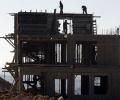
Indebted developers are cutting staff as they slow work on existing projects and postpone new ones until they clear a backlog of 700,000 unsold homes
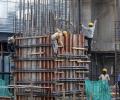
Modi's party also wants to regulate property markets and tie investor money to specific projects to stop developers diverting cash elsewhere.

India's economy grew 8.8 percent year-on-year in the June quarter, the strongest performance in more than two years, powered by robust manufacturing growth.

While Raghuram Rajan has said in the past that other factors, including domestic fundamentals, outweigh the US Fed policy meet, this time it would be different

Jaitley promised higher investment in roads and railways.

The accountancy giant said the rapid rise of the Indian economy with its young workforce would push it up from being the 10th largest economy in 2013 to the third largest by 2030.

While asserting that the growth of coronavirus cases in the country has been more or less linear and not exponential, it also said testing has been ramped up consistently.

Shifting its stance of monetary policy towards targeting retail inflation as it is an "inequitable tax", RBI today said it may exceed 8 per cent by March end and efforts will continue to bring it down.

Recent data from market analytics firm Nielsen shows that the rural market in the country's 630,000-odd villages is pulling down the overall FMCG business.

The Organization of Petroleum Exporting Countries (OPEC) in its latest monthly oil market report projected the world's third-biggest energy consumer to add 0.39 million barrels per day (bpd) of crude oil demand in 2022. India's oil demand rose from 4.51 million barrels per day in 2020 to 4.76 million bpd in 2021, recording a 5.61 per cent growth.
The new series claims GDP grew at seven per cent between April and June 2015, while gross value added (GVA) grew at 7.1 per cent.

Indian equities are in a multi-year bull story with capex cycle recovery as the main driver.

South and South-West Asia could witness an economic growth of 5.3 per cent in 2015, which will be a four-year high.
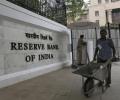
In all, RBI has cut interest rates by 110 bps this year. But this has not yet led to a boost in economic activity. While the growth rate has slowed to a five-year low, consumer confidence is waning and foreign direct investment has plateaued.

It pointed out that farm loan waivers, combined with a potential stimulus which the government is mulling now, can result in a 1 percentage point slippage in fiscal deficit

'You need to devalue the currency, ignite inflation, which then begins to oil the wheels of the economy.' 'Without that this severe recession is not going to reverse.'

Former Finance Minister P Chidambaram on Monday said the high growth that Indian economy has logged in the first quarter of the current fiscal was on account of the UPA policies and the new government must give it the due credit.
Even in the coming fiscal, the growth is likely to be in the range of 7 to 7.5 per cent, the PM's panel said, adding that inflation will moderate to four per cent by February-end. The gross domestic product growth was 9 per cent in 2007-08 and inflation has already declined to below six per cent in January from the peak of 12.91 per cent in August 2008.

2019 appears a story of two halves for Indian equities - a more difficult first half might precede a stronger second half, said Abhiram Eleswarapu, bottom, left, Head of India Equity Research, BNP Paribas in an interview with Ashley Coutinho.

The RBI's mistake may have been in interpreting its mandate to maintain retail inflation at 4%, with 2% leeway in either direction, as being a mandate that permitted it to do nothing even when inflation was at or near the upper bound of 6%, observes T N Ninan.

The survey, however, said that GDP is expected to revert to growth terrain next year, when it is likely to grow by 7.2 per cent.

As the House took up the debate on Motion of Thanks on the President's Address, the Bharatiya Janata Party launched a frontal attack on opposition parties specially the Congress for their stance against the CAA, saying they were trying to divide the nation.

The S&P BSE Sensex shed 286 points to close at 24,539 and the Nifty50 lost 100 points to end at 7,456.

Lower crude prices and dip in gold demand will push the CAD down.
The National Council of Applied Economic Research, which had forecast the country's economy to grow by 8.5 per cent in 2007-08, has raised projection to 8.9 per cent on improved performance of agriculture and services sectors.In case of industry, although the investment climate continues to be strong, the slower growth of exports may be a dampening factor, but retained the growth in industrial sector unchanged at 9%.
